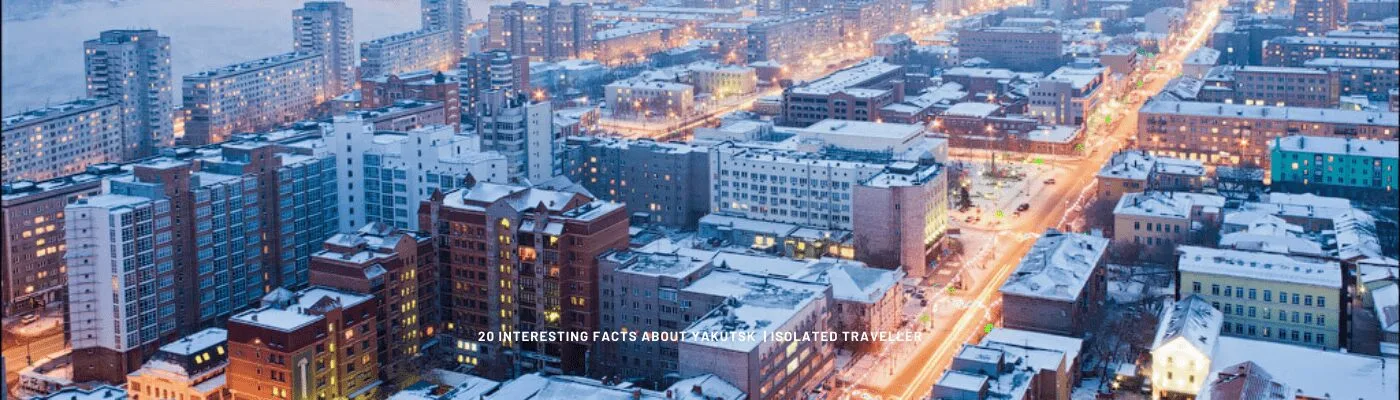
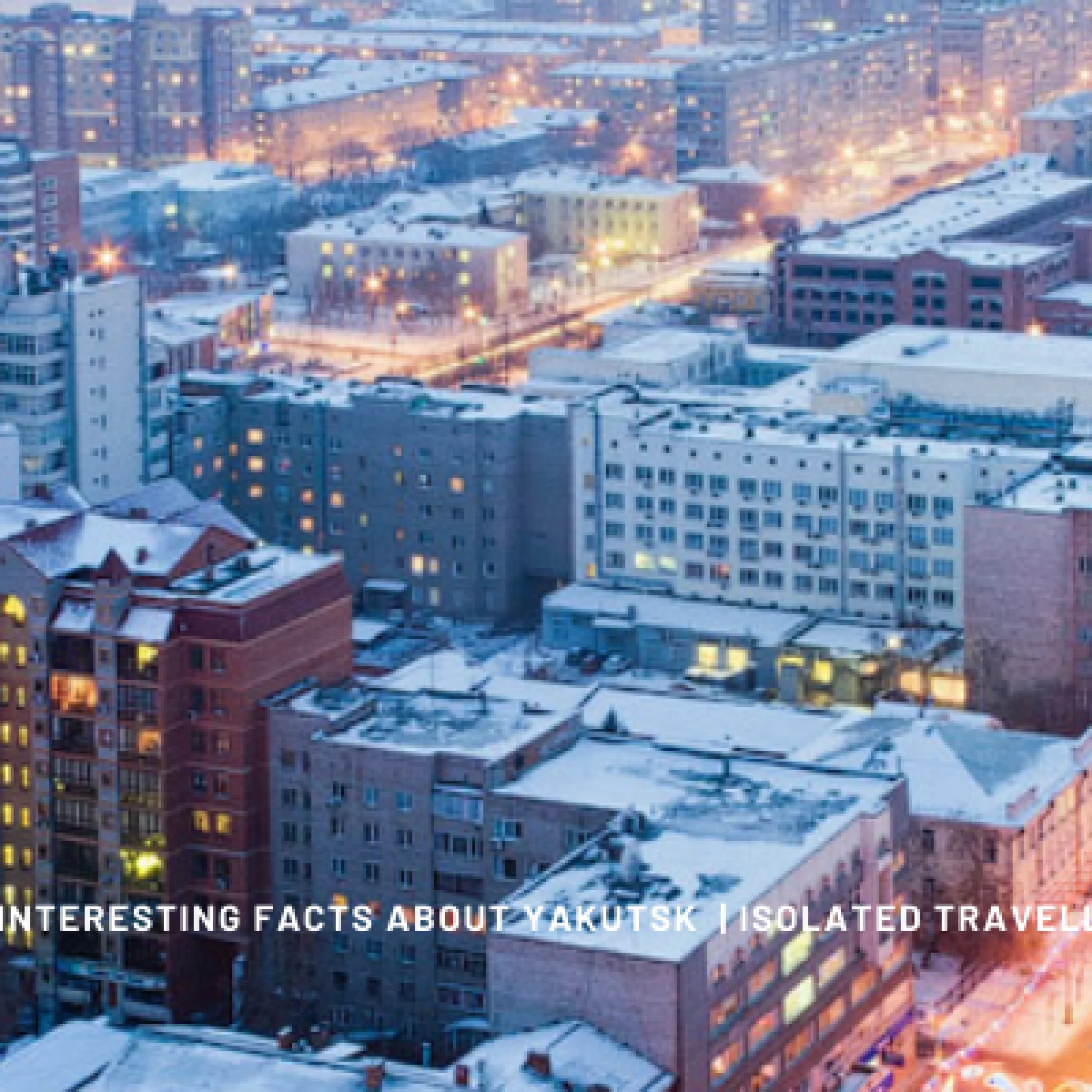
Yakutsk, in eastern Siberia, is the coldest large city on Earth. Its 350,000 people live on permanently frozen ground, with winter temperatures that regularly fall below minus 40 degrees, beside a great river that has no bridge. Here are 25 facts about it.
Key facts at a glance
- Country: Russia (capital of the Sakha Republic, Yakutia)
- Founded: 1632
- Population: about 350,000
- River: Lena
- January average: about minus 38 degrees
- Time zone: UTC+9, six hours ahead of Moscow
Cold
- Yakutsk is the coldest city of its size in the world.
- The average temperature in January is around minus 38 degrees, and the record low is below minus 64.
- In July, by contrast, the temperature often rises above 30 degrees, so the range over a year can be 100 degrees.
- It is the largest city built on continuous permafrost; the ground is frozen to a depth of several hundred metres.
- Most buildings stand on concrete piles driven deep into the frozen ground, so that their heat does not thaw it and make them sink.
- Water and heating pipes run above ground for the same reason.
- At about minus 40 a thick “ice fog” forms from car exhausts and human breath and hangs over the streets.
- Drivers often leave their engines running all day, or keep their cars in heated garages.
- Younger children are kept home from school when it is colder than about minus 45.
- Fish at the outdoor market needs no refrigeration: it stands frozen solid, upright in boxes.
City and river
- Yakutsk was founded in 1632 by Cossacks under Pyotr Beketov as a fort on the Lena.
- It became the base from which Russians explored and conquered the far north-east of Asia, as far as the Pacific and Alaska.
- The Lena, more than 4,000 km long, is several kilometres wide here, and there is no bridge.
- In summer cars cross by ferry and in winter on a road over the ice; for some weeks in spring and autumn the city can be reached only by air.
- The railway ends on the opposite bank of the river.
- The Kolyma Highway to Magadan, built by Gulag prisoners, is known as the “Road of Bones”.
Yakutia
- Yakutsk is the capital of the Sakha Republic, the largest region of Russia, almost as big as India, with fewer than a million people.
- The region produces about a quarter of the world’s diamonds, as well as gold.
- The Sakha, or Yakuts, speak a Turkic language and make up about half the population.
- The Mammoth Museum displays remains preserved for tens of thousands of years in the frozen ground.
- The “Kingdom of Permafrost” is an attraction in a tunnel dug into a frozen hill, filled with ice sculptures.
- The midsummer festival of Ysyakh celebrates the Sakha new year with horse races, wrestling and fermented mare’s milk.
- Stroganina, thin shavings of raw frozen fish, is the local delicacy.
- The Lena Pillars, towering rock formations along the river upstream, are a World Heritage Site.
- Oymyakon, the coldest inhabited place on Earth, is also in Yakutia.
Read more
More from Russia: Irkutsk, Lake Baikal, Yekaterinburg, Krasnoyarsk, Yakutsk, Suzdal and the Moscow Kremlin.
Frequently asked questions
How cold does it get in Yakutsk?
The January average is about minus 38 degrees, and it has fallen below minus 64.
Why are buildings in Yakutsk on stilts?
To stop their heat thawing the permafrost beneath them.
Is there a bridge over the Lena at Yakutsk?
No; people cross by ferry in summer and over the ice in winter.
Where is Yakutsk?
In eastern Siberia, about 450 km south of the Arctic Circle.
Last updated: November 2026.