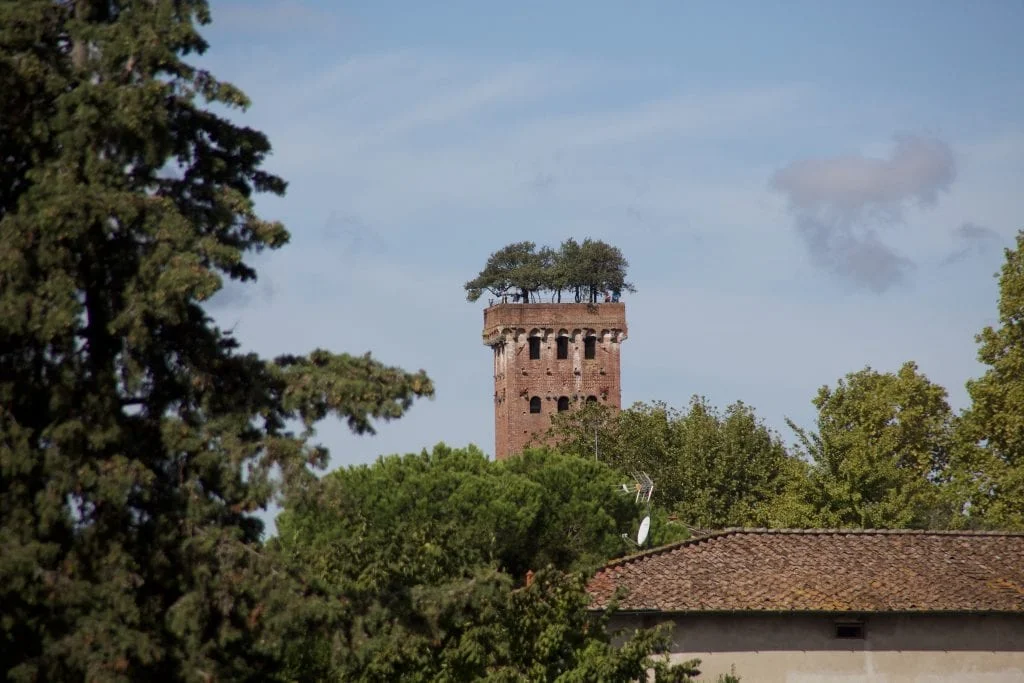
The Guinigi Tower is the emblem of Lucca: a tall medieval tower of red brick with a garden of oak trees growing on its roof, 44 metres above the streets. Built in the 14th century by the richest family in the city, it is one of the few survivors of the scores of towers that once bristled above the walls. Climbing its 230 steps to stand in the shade of the trees, with the terracotta roofs of Lucca and the Apuan Alps spread out below, is the thing every visitor to the city should do. This guide tells you what to know.
Key facts at a glance
- Location: Via Sant’Andrea 45, 55100 Lucca, Tuscany, Italy
- Height: about 44 metres
- Steps: 230
- Built: second half of the 14th century
- Trees: seven holm oaks
- Open: daily
- Time needed: 30 to 45 minutes
History
A city of towers
In the Middle Ages the leading families of the Italian city-states built tall towers beside their houses, for defence and above all for show. Lucca is said to have had more than a hundred within its walls. Most were later cut down or demolished.
The Guinigi
The Guinigi were merchants and bankers who grew rich on the silk trade. In the late 14th century they built a great complex of brick palaces and towers in the centre of the city. From 1400 to 1430 Paolo Guinigi ruled Lucca as its lord, until he was overthrown and died in prison.
Why the trees?
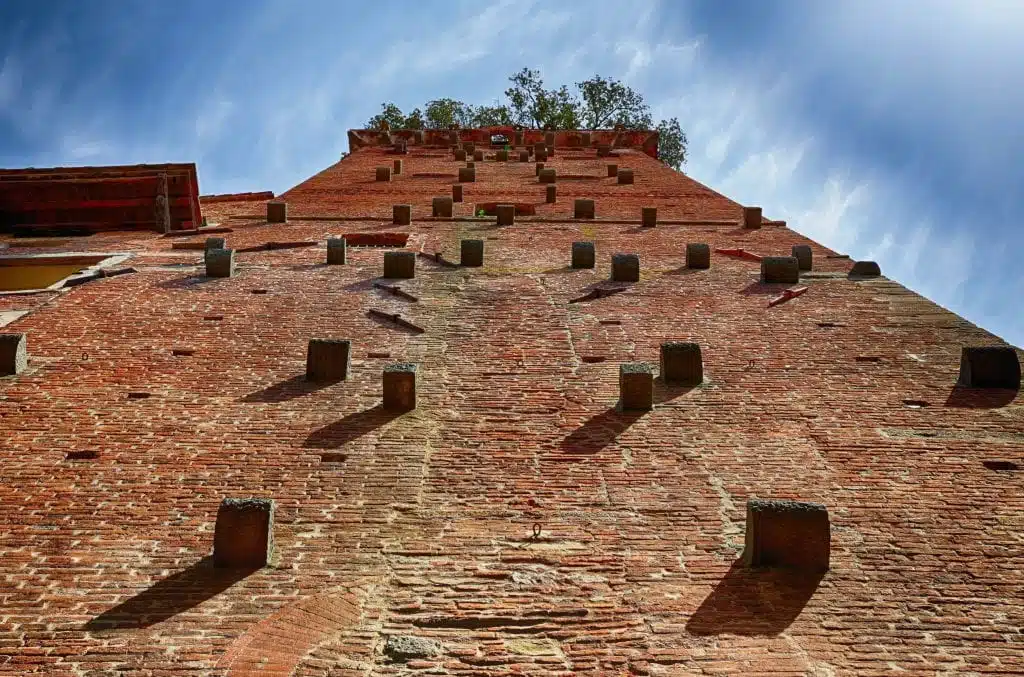
The holm oaks were planted on the tower as a symbol of rebirth and renewal, and a roof garden is already shown in a picture of Lucca of the 15th century. According to legend, the tallest tree was planted by Paolo Guinigi himself and shed all its leaves on the day he was captured. The present trees have been replanted over the centuries.
A gift to the city
The last descendant of the family bequeathed the tower and palace to the city of Lucca in 1968.
The climb
- The first flights are broad stone stairs inside the palace.
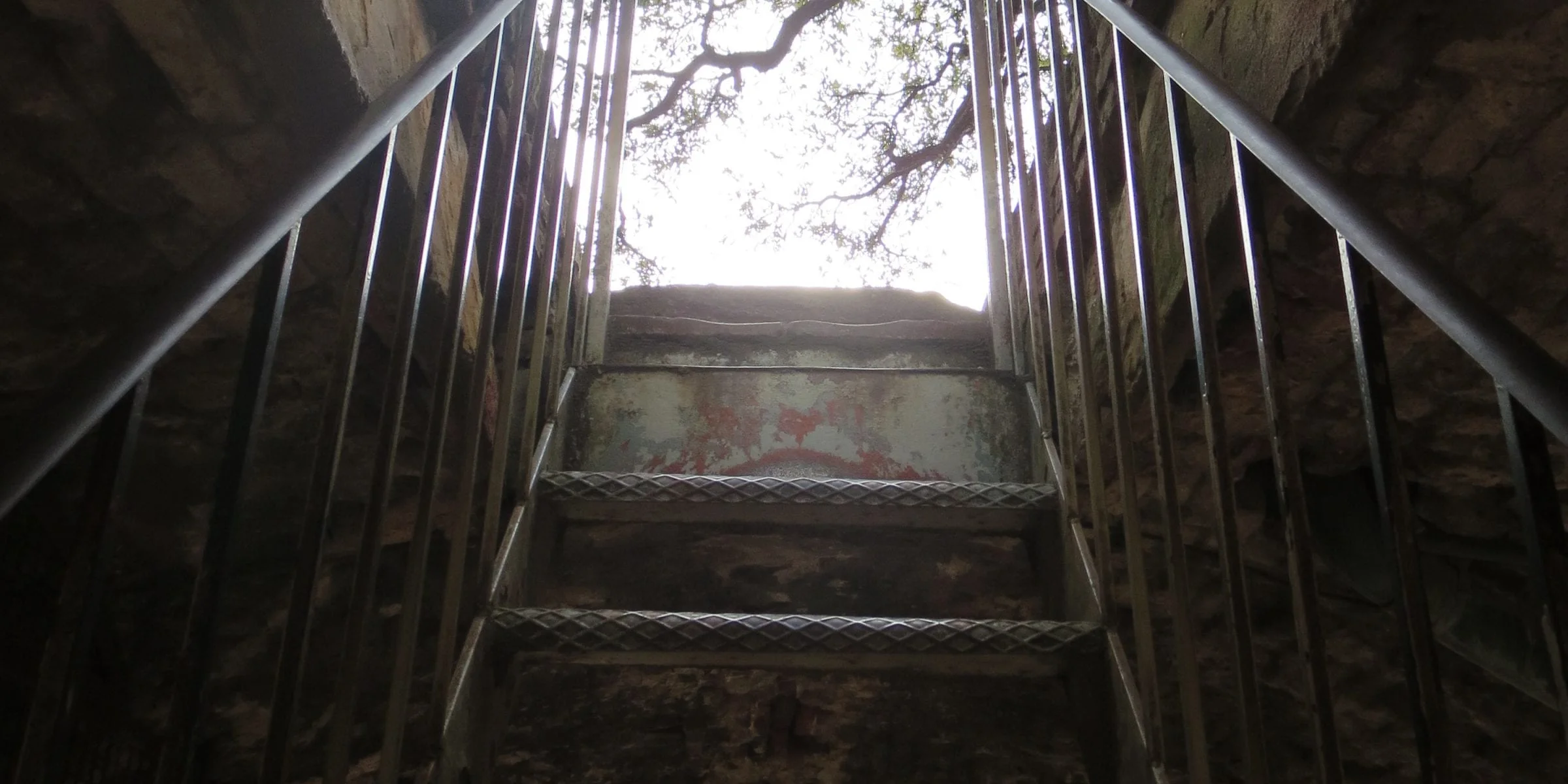
- Higher up, a modern metal staircase winds around the inside of the hollow brick shaft, past paintings showing medieval Lucca.
- The last few steps are narrow and steep, emerging through a hatch on to the roof.
- At the top, the seven oaks grow in a raised brick bed in the centre, with a walkway around them.
The view
- North: the oval of the Piazza dell’Anfiteatro and the white facade of San Frediano, with the Apuan Alps beyond.
- West: the Torre delle Ore, the clock tower, the other tall tower of Lucca that can be climbed, and the church of San Michele in Foro.
- South: the bell tower of the cathedral and the Pisan hills.
- All around: the tree-lined ring of the Renaissance walls.
Visiting
- Opening times: open every day, from mid-morning until late afternoon in winter and until evening in summer.
- Tickets: a small charge; a combined ticket with the Torre delle Ore and the botanical garden is available.
- Numbers: only a limited number of people are allowed on the roof at once, so there may be a short wait in high season.
- Access: there is no lift, and the climb is unsuitable for anyone with limited mobility or a fear of heights.
- Best time: late afternoon, for the light on the rooftops.
For more on the city, read our amazing facts about Lucca.
Frequently asked questions
Why are there trees on the Guinigi Tower?
They were planted as a symbol of rebirth by the Guinigi family.
How many steps are there in the Guinigi Tower?
230.
How tall is the Guinigi Tower?
About 44 metres.
What kind of trees grow on the Guinigi Tower?
Holm oaks.
Is there a lift in the Guinigi Tower?
No.
Last updated: November 2026.